

5 Questions Every Engineer Should Ask Before Starting a GRP Manufacturing Project
Whether you are designing a new product or replacing an existing component, asking the right questions at the start of a composites project can save significant time, costs and delays later in the process.
At MPM, we've supported customers across transport, infrastructure, leisure, energy and industrial sectors, and successful projects consistently begin with strong planning. See some of our case studies here.
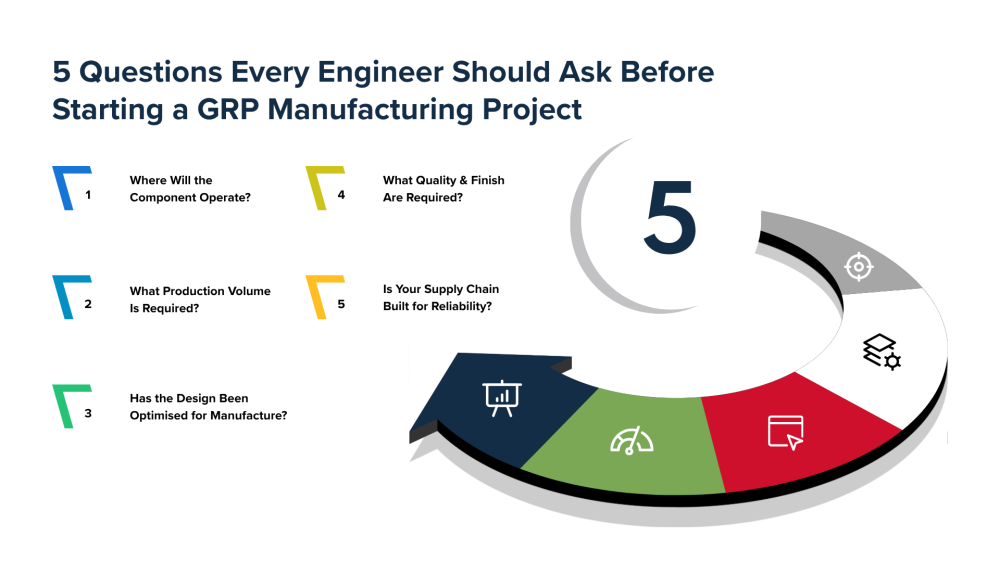
1. Where Will the Component Operate?
The first question engineers should ask is where the component will operate. Environmental conditions such as UV exposure, chemicals, temperature and impact requirements influence the choice of resin system, reinforcement and finish.
2. What Production Volume Is Required?
Secondly, production volume should be considered early. Whether manufacturing a prototype or a high-volume production run, the tooling and manufacturing process should be selected to deliver the best balance of quality, cost and efficiency.
3. Has the Design Been Optimised for Manufacture?
Another important consideration is whether the design has been optimised for manufacture. Working with an experienced GRP manufacturer during the design stage can reduce tooling costs, improve manufacturability and minimise material waste.
4. What Quality & Finish Are Required?
Engineers should also define the required finish and quality standards from the outset. Cosmetic requirements, dimensional tolerances and performance expectations all influence manufacturing methods and quality control processes.
5. Is Your Supply Chain Built for Reliability?
Finally, supply chain resilience should never be overlooked. Choosing a reliable UK manufacturing partner can improve communication, reduce lead times and minimise the risks often associated with overseas sourcing.
At MPM, we support customers throughout product development, tooling and production, helping engineering teams deliver high-quality GRP components with confidence from concept through to manufacture.